What is ‘ACH D- / ACH DR’ on my bank statement?
ACH D or ACH DR indicates an automated direct debit processed through the National Automated Clearing House system. It collects periodic payments you authorized, such as loans, mutual fund investments, insurance premiums, or utility bills.
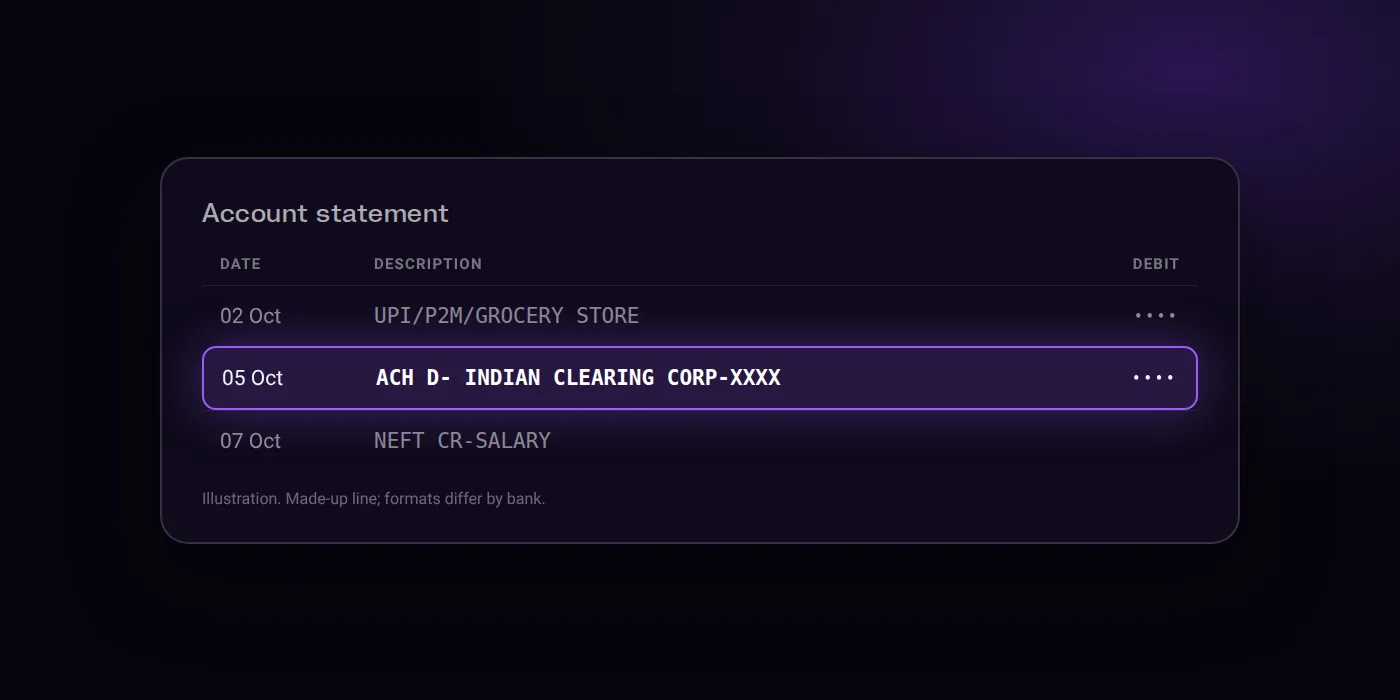
How it can look (made-up examples)
ACH D- INDIAN CLEARING CORP-XXXXACH DR /MUTUAL FUND SIP/12345ACHDR-LOAN-0091
What it is
An automated direct debit transaction processed through the National Automated Clearing House (NACH) system, used for collection of periodic payments such as utility bills, loans, mutual fund investments, and insurance premiums.
Who charged you
A merchant, corporate, or collection agency with whom you authorized an e-NACH mandate.
How to find out what it was
- Check real-time transaction notifications sent by your bank to track your payments.
- Review your mandate registration alerts sent by your bank following the initial setup.
Is it recurring? How to stop it
This is often a recurring debit, so expect it again unless it is stopped.
- Contact the merchant, corporate, or collection agency to cancel any registered mandate.
- Review mandates regularly and revoke those that are no longer needed.
- Member banks handle dispute resolution via NACH's online Dispute Management System (DMS).
Step-by-step guides:
- How to cancel an HDFC Bank e-mandate (NACH/ECS)
- How to cancel an ICICI Bank e-mandate (NACH/ECS)
- How to cancel an SBI e-mandate (NACH/ECS)
- How to cancel an Axis Bank e-mandate (NACH/ECS)
- How to cancel a Kotak Bank e-mandate (NACH/ECS)
What it costs
Charges differ by bank and change over time. What the sources say:
- India Post Payments Bank (IPPB): Rs. 50 + GST for NACH Mandate Registration
- India Post Payments Bank (IPPB): Rs. 100 + GST for returning charges of NACH (debit) due to insufficient balance
Your own bank’s schedule of charges has the current figure.
Think this charge is fraud?
- Block it now in your bank app: freeze the card, or turn off the UPI ID or mandate that was used.
- Tell your bank straight away, through the app, net banking or its customer care, so the transaction is on record.
- Report the fraud: call the national cyber fraud helpline 1930, or file a complaint at cybercrime.gov.in.
Good to know
- To cancel a mandate, you must approach the merchant or collection agency rather than simply stopping it on your own.
- Always verify that you are dealing with a trusted biller before setting up and authorizing e-NACH mandates.
Questions people ask
Why was I charged under ACH D?
A merchant, corporate, or collection agency debited your account under an e-NACH mandate you previously authorized. Check the transaction notifications and setup messages sent by your bank to identify the biller.
Will this charge repeat?
Yes. This is a recurring payment processed automatically for periodic commitments such as loan instalments, investments, insurance, or utilities.
How do I cancel this debit?
Contact the merchant, corporate, or collection agency directly to cancel the mandate. You cannot simply stop it on your own without approaching the billing entity.
Can I dispute the debit through my bank?
Yes. Member banks handle dispute resolution through the NACH online Dispute Management System. Approach your bank if you believe an unauthorized or incorrect debit occurred.
Does my bank charge fees for NACH mandates?
Some banks charge administrative fees. For instance, India Post Payments Bank charges ₹50 + GST for mandate registration and ₹100 + GST if an ACH debit fails due to insufficient balance.
Last checked on against npci.org.in, ippbonline.bank.in (official). Statement formats differ by bank; the examples above are made up to show the shape.