What is ‘ECS’ on my bank statement?
ECS stands for Electronic Clearing Service (Debit), an RBI payment scheme used for recurring automated payments. It appears when an authorized institution, such as a lender, insurer, or utility company, debits your account under an existing mandate.
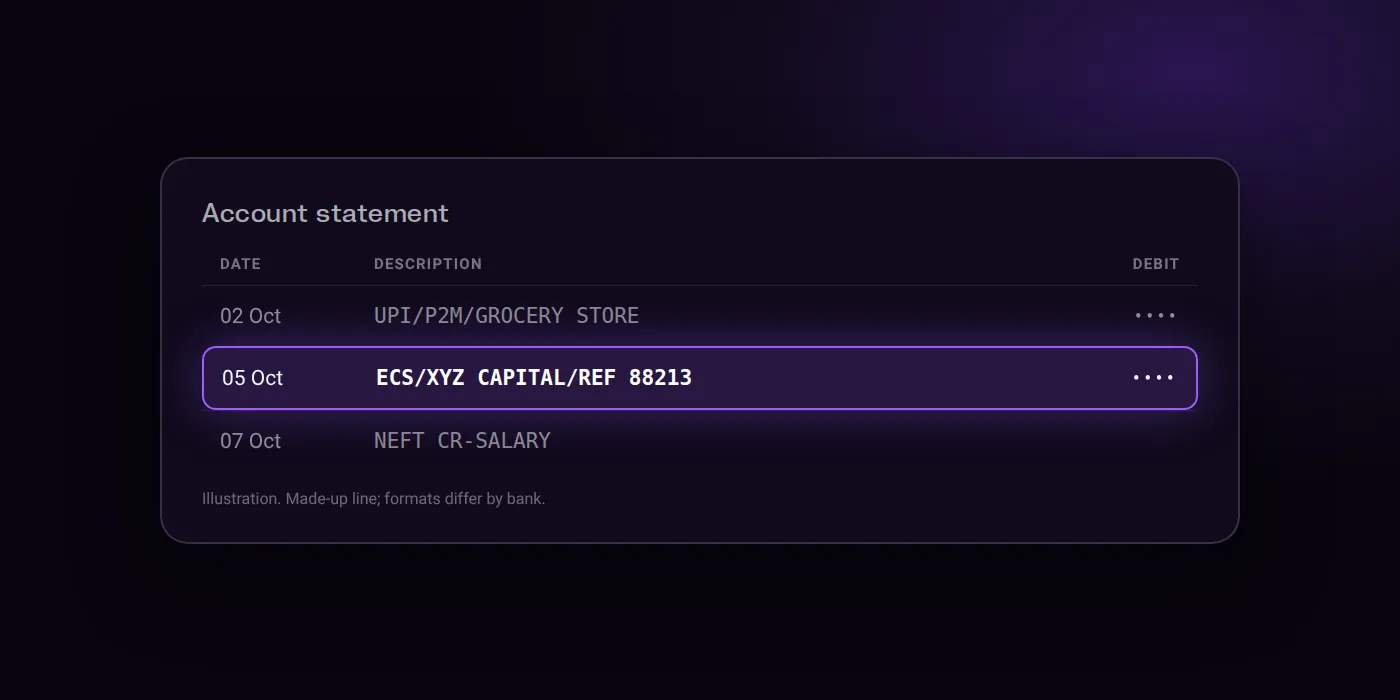
How it can look (made-up examples)
ECS/XYZ CAPITAL/REF 88213ECS DR 4521 SIPBY ECS-DEBIT
What it is
Electronic Clearing Service (Debit), or ECS (Debit), is a payment scheme introduced by the Reserve Bank of India to facilitate direct debits from customer accounts for periodic and repetitive payments.
Who charged you
An authorized utility company, institution, lender, insurance corporation, or collection service provider to whom you have submitted a direct debit mandate.
How to find out what it was
- The transaction in your bank account is tied to an authenticated mandate that may include a unique identification number allotted by your branch, referencing the account and the purpose of the debit.
- In cases of multiple debits on the same day, user institutions are expected to provide additional information so you can identify the purpose of the debit.
Is it recurring? How to stop it
This is often a recurring debit, so expect it again unless it is stopped.
- You can withdraw the mandate directly through your bank without involving the billing company, which functions like a 'stop payment' instruction.
- You can also submit withdrawal instructions directly to the billing company or institution.
Step-by-step guides:
- How to cancel an HDFC Bank e-mandate (NACH/ECS)
- How to cancel an ICICI Bank e-mandate (NACH/ECS)
- How to cancel an SBI e-mandate (NACH/ECS)
- How to cancel an Axis Bank e-mandate (NACH/ECS)
- How to cancel a Kotak Bank e-mandate (NACH/ECS)
Think this charge is fraud?
- Block it now in your bank app: freeze the card, or turn off the UPI ID or mandate that was used.
- Tell your bank straight away, through the app, net banking or its customer care, so the transaction is on record.
- Report the fraud: call the national cyber fraud helpline 1930, or file a complaint at cybercrime.gov.in.
Good to know
- If you submit withdrawal instructions to the billing company/institution, it must be received at least 5 days before the ECS file is submitted to the clearing house/agency to ensure the debit is omitted.
- Banks are only permitted to debit your account if an authorized mandate exists on their records; lacking this, they do not have legal protection to process the debit.
- When setting up an ECS mandate, you can choose to cap the maximum debit amount or place a time limit on the life of the mandate.
Questions people ask
Why was I charged under ECS?
An institution you authorized, such as an insurance corporation, lender, or utility company, collected a periodic payment. The entry links to an authenticated direct debit mandate with a unique identification number referencing the purpose.
Will this charge repeat?
Yes. ECS is intended for repetitive and periodic payments. It will recur according to the schedule, duration, and maximum amount limit set when the mandate was created.
How do I identify who debited my account?
Check the transaction line in your bank app or statement for the unique mandate identification number. When multiple debits happen on the same day, user institutions are expected to supply details identifying the specific purpose.
How do I stop an ECS debit?
You can stop it by instructing your bank to withdraw the mandate directly, without involving the billing institution. You can also notify the billing company, provided they receive your cancellation at least five days before submitting the clearing file.
Can my bank deduct an ECS payment without a mandate?
No. Banks are only allowed to debit your account if an authorized mandate exists on their records. Without this authenticated record, the bank has no legal protection to process the debit.
Last checked on against rbi.org.in, m.rbi.org.in (official). Statement formats differ by bank; the examples above are made up to show the shape.